

The Ultimate Guide to Compliance Automation: Benefits, Implementation, and More

Companies today face a relentless challenge: an ever-expanding web of regulatory compliance requirements, tighter enforcement, and mounting organizational complexity, often managed with the same spreadsheets and manual processes that were being used two decades ago.
The gap between what modern compliance management demands and what traditional approaches can deliver has never been wider. For organizations serious about building a resilient compliance program, that gap represents real risk: missed controls, audit failures, and costly remediation efforts that could have been avoided entirely.
Compliance automation is how leading organizations are closing that gap — not as a convenience, but as a strategic necessity. Below, we’ll walk you through the GRC automation landscape, including the key benefits of compliance automation, an implementation roadmap, and suggestions for avoiding pitfalls.
Let’s dive in.
The Shifting Sands of Compliance: Why Automation Isn’t Just a Nice-to-Have Anymore
The world of compliance isn’t static. It’s a swirling vortex of new regulations, updated standards, and ever-increasing scrutiny. Data privacy laws like GDPR and CCPA, industry-specific mandates such as HIPAA and PCI DSS, and cybersecurity frameworks like NIST and ISO 27001 are constantly being revised and expanded. Keeping up feels like trying to hit a moving target while blindfolded.
For businesses, this constant flux translates into significant risk. A single compliance misstep can lead to hefty fines, reputational damage, and even legal battles. The traditional approach (i.e. relying heavily on manual processes, spreadsheets, and human memory) simply can’t keep pace.
Unpacking the Benefits: How Compliance Automation Changes the Game
The case for compliance automation goes well beyond checking regulatory boxes. When you automate your GRC operations, you’re fundamentally strengthening how your organization identifies, manages, and responds to risk.
From tightening access controls to leveraging automated evidence collection, the benefits impact your entire compliance management function. Here’s a closer look at what that looks like in practice.
From Reactive to Proactive: Enhancing Data Security and Risk Management
Manual compliance processes are, by nature, reactive. This means that you discover a vulnerability or a gap in your compliance frameworks during an audit (or worse, after a breach has already occurred).
Compliance automation flips this script. It transforms your approach into a sophisticated early warning system that continuously monitors your environment for potential risks, misconfigurations, and non-compliance. This proactive stance allows you to address issues before they escalate into full-blown crises, significantly enhancing your data security and overall risk management.
Efficiency Unlocked: Reclaiming Time and Resources
Manual compliance is a notorious time sink. Think about it: auditors requesting evidence, teams scrambling to pull reports from disparate systems, hours spent compiling data, and then even more hours spent formatting it all to fit specific regulatory requirements. It’s inefficient, and it’s a massive drain on your most valuable resource: your people.
Automation takes the grunt work out of GRC, streamlining data collection, evidence generation, control mapping, and report creation. Suddenly, compliance tasks that once took days or weeks can be completed in hours or even minutes. This frees up your highly skilled compliance and security teams to focus on strategic initiatives, complex problem-solving, and truly understanding the regulatory landscape — rather than getting bogged down in administrative tasks.
Accuracy and Consistency: Eradicating Human Error
Humans are, well, human. We make mistakes. Typos, forgotten steps, misinterpretations: these are all par for the course in manual processes. Even a small error can have significant repercussions in GRC.
Compliance automation systems, when properly configured, operate with significant precision and consistency. They follow predefined rules, execute tasks identically every single time, and eliminate the variability introduced by human interaction. This ensures that your controls are applied uniformly, your evidence is always accurate, and your reports are consistently formatted, reducing the risk of audit findings due to simple human oversight.
Demonstrating Due Diligence: Strengthening Your Audit Posture
When an auditor comes knocking, they want to see clear, verifiable evidence of your compliance efforts. Manual processes often result in fragmented evidence, disparate documentation, and a frantic scramble to assemble everything. This can make it challenging to demonstrate a clear and consistent picture of your compliance posture.
An automated compliance system doesn’t just provide operational efficiency; it also acts as a central repository and a single source of truth, systemically collecting, storing, and organizing your compliance data and evidence. When an auditor requests information, the right GRC automation system will be able to instantly provide them with comprehensive, well-structured reports and audit trails.
This not only streamlines the audit process and keeps you always audit-ready but also projects an image of professionalism, builds trust, and even leads to smoother audit outcomes. It proves you’ve done your homework, consistently and meticulously.
Navigating the Implementation Journey: Your Step-by-Step Guide
Implementing compliance automation software isn’t a flip of a switch so much as a strategic journey. But with a clear roadmap, you can navigate it successfully.
Phase 1: Defining Your Compliance Landscape and Goals
Before you even think about software, you need to understand your own situation. What regulations apply to you? HIPAA, GDPR, SOC 2, PCI DSS, NIST CSF? List them out. Next, identify your current compliance maturity level. Where are your biggest pain points? Is it data collection, report generation, or perhaps simply keeping track of control ownership?
Now, define your goals. Are you looking to reduce audit preparation time by 60%? Improve your security posture by automating control checks? Minimize human error in reporting? Be specific and measurable. These goals will act as your north star throughout the entire implementation process, guiding your decisions and helping you measure success.
Phase 2: Selecting the Right Automation Solution for Your Needs
This is where you move from theory to technology. The market is full of GRC automation tools, each with its own strengths — but don’t be tempted to fall for shiny objects. Instead, match potential solutions to the needs and goals you defined in Phase 1.
Consider factors like:
- Scalability: Can the solution grow with your company and keep up with evolving regulatory requirements?
- Integration capabilities: How nicely does it play with your existing security tools, IT systems, and HR platforms?
- Ease of use: Will your team actually adopt it, or will bad UX make it become shelfware?
- Reporting and dashboarding: Can it provide the insights you need to demonstrate compliance and identify risks?
- Vendor support and reputation: What kind of partnership can you expect?
To help in the selection process, make sure to request demos, talk to current users, and dive deep into the features. You’re essentially investing in a long-term partnership, so choose wisely.
Phase 3: The Integration Imperative: Weaving Automation into Your Existing Ecosystem
A standalone automation tool is a bit like a brilliant scientist locked in a room: full of potential but unable to share its discoveries. For true impact, your compliance automation solution needs to integrate seamlessly with your existing IT infrastructure. This means an API-first strategy that connects to your identity and access management (IAM) systems, security information and event management (SIEM) solutions, vulnerability scanners, cloud platforms, DevOps tools, and even HR systems.
These integrations are crucial for automated data collection, real-time control monitoring, and evidence generation. A well-integrated system automatically pulls data from various sources, maps it to relevant controls, and flags any deviations. This phase often requires close collaboration between your compliance, IT, and security teams to ensure that data flows correctly and securely.
Phase 4: Training Your Team: Empowering Your Workforce
Technology is only as good as the people who use it… which is why a successful implementation hinges on empowering your team to use the new system, not just imposing it on them from above.
What you can do: Provide comprehensive training tailored to different user groups, including administrators, compliance analysts, auditors, and even departmental managers who might need to contribute evidence. Explain why this change is happening and how it will benefit them personally, highlighting the time savings and the ability to focus on more strategic work. Above all, try to foster an environment where questions are encouraged and feedback is valued.
Phase 5: Continuous Monitoring and Optimization: The Journey Never Ends
We all know that compliance is an ongoing process, not a one-and-done project, and the same is true for compliance automation tools. After implementation, you’ll need to regularly monitor the system’s performance. Are the settings working as expected? Are there any false positives or negatives? Are reports being generated accurately and efficiently? Gather feedback from your team on usability and be prepared to update control mappings and add new automation rules as the regulatory landscape evolves.
Beyond the Basics: Advanced Strategies for Compliance Automation Success
Once you’ve mastered the fundamentals, it’s time to elevate your game. The true power of compliance automation lies in its potential for innovation. Here are a few ways to take advantage of the full scope of benefits from your new GRC automation platform.
Leveraging AI and Machine Learning for Predictive Compliance
Imagine a system that doesn’t just tell you if you’re compliant now, but can also predict where you might be non-compliant in the future. That’s the promise of artificial intelligence and machine learning (ML) in compliance automation. AI-powered tools can analyze vast datasets to identify patterns and anomalies, while an ML model might identify common misconfigurations across similar systems that could lead to a future audit finding. These abilities allow you to address potential issues before they fully manifest.
Orchestrating Compliance Across Diverse Regulatory Frameworks
Many organizations operate under a tangled web of regulations. A healthcare provider, for example, might need to comply with HIPAA, PCI DSS, SOC 2, and state-specific privacy laws. Managing these frameworks separately is a recipe for redundancy and inefficiency.
Advanced compliance automation solutions excel at orchestrating compliance across multiple frameworks through control mapping and inheritance. Instead of implementing the same security control (e.g. strong password policies) individually for each framework, the system maps a single control implementation to satisfy requirements across multiple regulations. This streamlines evidence collection, reduces duplication of effort, and provides a holistic view of your compliance status across all applicable frameworks from a single pane of glass.
Building a Culture of Continuous Compliance
Compliance is ultimately a shared organizational imperative. Advanced automation solutions help foster a culture of continuous compliance, embedding compliance into daily operations instead of treating it like a separate, periodic event. By integrating compliance checks into development pipelines (DevSecOps), automating policy enforcement, and providing real-time dashboards to various stakeholders, compliance can become an intrinsic part of how everyone works.
Common Pitfalls and How to Avoid Them
Even with the best intentions, the path to automation isn’t without its obstacles. Being aware of these common pitfalls can help you anticipate and navigate around them.
Pitfall 1: Underestimating the scope of implementation. One of the biggest mistakes is viewing compliance automation as just another IT project instead of as a strategic business transformation. Underestimating the time, resources, and effort required can lead to budget overruns, project delays, and ultimately, a failed implementation.
How to avoid it: Conduct a thorough initial assessment. Map out all affected processes and stakeholders. Allocate sufficient budget and dedicated resources. Be realistic about timelines, and build in buffer periods for unforeseen challenges.
Pitfall 2: Failing to involve key stakeholders. Compliance automation touches virtually every department, from IT and information security to legal, HR, operations, and even executive leadership. If you proceed without their input and buy-in, you’ll inevitably face resistance.
How to avoid it: Identify all key stakeholders from the start and clearly communicate the benefits of automation for each group. Actively solicit feedback during the selection and implementation phases, keeping in mind that early and continuous engagement is the bedrock of success.
Pitfall 3: Ignoring the human element. People naturally resist change, especially when new technology threatens established workflows or perceived job security. If your team doesn’t understand the “why” behind new automation, they’ll likely resist adoption.
How to avoid it: Focus on change management. Communicate transparently and frequently, emphasizing how automation will empower employees to do more strategic work, not replace them. Provide ample training and ongoing support, and celebrate early successes to build momentum.
The Future is Automated: Embracing GRC Automation with RegScale
The regulatory compliance landscape is only going to grow more complex from here. Manual approaches are becoming increasingly untenable, and frankly, risky.
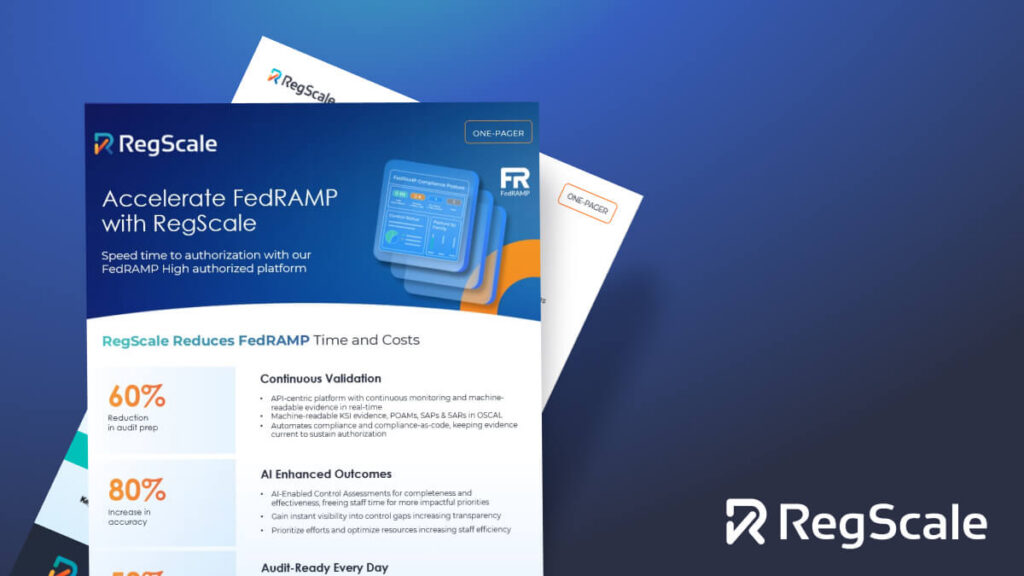
RegScale is built for exactly this challenge. Its Continuous Controls Monitoring platform deploys anywhere — on-prem, cloud, or air-gapped networks — and connects across your existing ecosystem to deliver near real-time compliance visibility at scale.
Rather than relying on error-prone manual processes, teams can use RegScale’s low-code/no-code automation to reduce program costs, strengthen security posture, eliminate data silos, and accelerate market entry with rapid certification. With a fleet of intelligent AI agents and out-of-the-box support for 60+ compliance frameworks, RegScale meets your organization wherever it is today and scales alongside you as you grow.
The future of compliance is automated, integrated, and intelligent. Are you ready to embrace it?
Ready to get started?
Choose the path that is right for you!
Skip the line
My organization doesn’t have GRC tools yet and I am ready to start automating my compliance with continuous monitoring pipelines now.
Supercharge
My organization already has legacy compliance software, but I want to automate many of the manual processes that feed it.