

In Regulated Industries, Not All Compliance Challenges Are Created Equal

The pressure is building. For many organizations, most of their compliance workload comes from regulations introduced over the past five years, our research finds. These requirements may have been introduced for good reason: to protect critical infrastructure, keep citizens safe, and preserve economic stability. But that doesn’t help to reduce the burden on GRC teams.
More importantly, regulation doesn’t magically improve the cyber maturity of an industry. Economic incentives, risk visibility, operational constraints, and tech architecture are equally important determinants.
This might alter the compliance landscape significantly from sector to sector. But the right GRC mindset and tooling should help to improve outcomes across them all.
Where the Burden Is Heaviest
To some extent, the threats facing today’s organizations cut across all verticals. According to Verizon, vulnerability exploitation is the most common initial access vector today, accounting for nearly a third (31%) of breaches. And it’s likely to continue trending upwards as AI collapses the exploitation window. Phishing and credential abuse round out the top three, signalling the persistent threat represented by employees.
Ransomware as a share of breaches continues to grow, even if payments are declining. And the supply chain remains a critical source of risk. Breaches involving third parties increased by 60% annually and now comprise half of all incidents, research reveals.
Against this backdrop, regulators are understandably keen to improve the baseline security posture of in-scope organizations. But the burden is falling more heavily on some than others. According to our data, financial services (46%) and healthcare (41%) were the industries most likely to include organizations expending over half of their compliance resources on recently introduced regulatory requirements. They’re also among the verticals with the biggest share (70%+) of organizations managing six or more frameworks.
The job of GRC teams is being made harder by limited resources. Government and healthcare are among those most likely to have seen budget and/or headcount cuts over the past year, our data reveals.
Different Approaches, Different Incentives
While government, financial services, healthcare, and critical infrastructure are some of the most heavily regulated GRC environments, organizations themselves can vary significantly in terms of their maturity. It’s down to several factors that go beyond the volume and complexity of regulations.
Financial services companies know they could lose millions and suffer significant reputational damage from fraud or major data breaches. They continuously monitor for such attacks, making cyber risks highly visible and quantifiable. The economic incentives for investment in GRC are clear, driving the sector to become among the most mature.
Governments spend significant resources on compliance and security, but often fail to get the same results as financial services/private sector companies due to different operational and organizational challenges. Legacy tech, bureaucratic procurement processes, skills shortages, and diverse organizational challenges can be stubborn roadblocks to GRC progress.
Healthcare has historically lagged other regulated industries in cybersecurity and compliance maturity. Risk can be more difficult to quantify, and ROI more challenging to calculate. A more hands-off approach to auditing and lower regulatory fines may distort economic incentives for investment in GRC. And operational priorities focus on patient care and clinical workflows, rather than taking systems offline to patch.
Critical infrastructure organizations, such as energy providers, face unique challenges due in part to their legacy operational technology (OT) and industrial control systems with long lifespans. They must balance modernization efforts against the realities of insecure physical hardware and costly replacement cycles. Even if patches were available for legacy kit, uptime is critical, which reduces the opportunity to apply updates.
Bringing It All Together
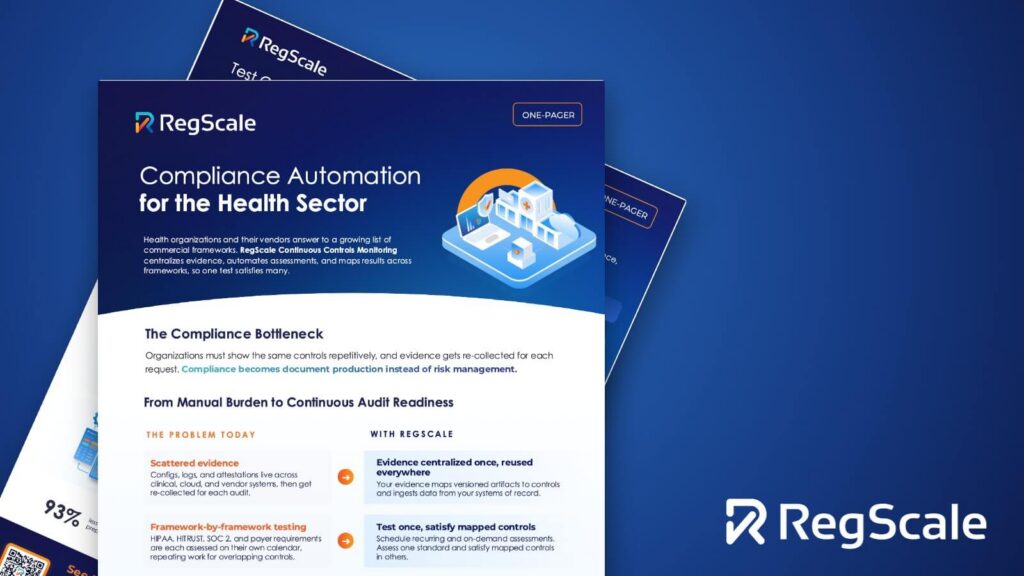
The compliance landscape is therefore fractured in ways that go beyond the different regimes that regulate specific industries. But a proactive approach to GRC focused on automation, advanced AI, and continuous monitoring can provide value across the board.
Organizations that lead the field will focus on GRC tools that:
- Support the full spectrum of compliance mandates, from NIST CSF and ISO 27001 to HIPAA and FedRAMP. And reduce the burden by mapping controls to multiple frameworks
- Enhance visibility into risk through easy-to-consume dashboards, continuous monitoring, and accurate evidence tracking
- Reduce operational constraints and costs through intelligent automation for evidence collection, continuous monitoring, framework mapping, continuous audit readiness and much more
- Integrate with existing technology architectures including cloud platforms, security tools and CMDBs
RegScale is helping some of the most heavily regulated organizations in world to mature their GRC programs in this way — across government, healthcare, energy, financial services and many other verticals. No two customers are the same. But from whatever point they start, and whatever their challenges, the goal is the same: a program that runs audit-ready every day, turning compliance into continuous risk reduction.
Ready to get started?
Choose the path that is right for you!
Skip the line
My organization doesn’t have GRC tools yet and I am ready to start automating my compliance with continuous monitoring pipelines now.
Supercharge
My organization already has legacy compliance software, but I want to automate many of the manual processes that feed it.